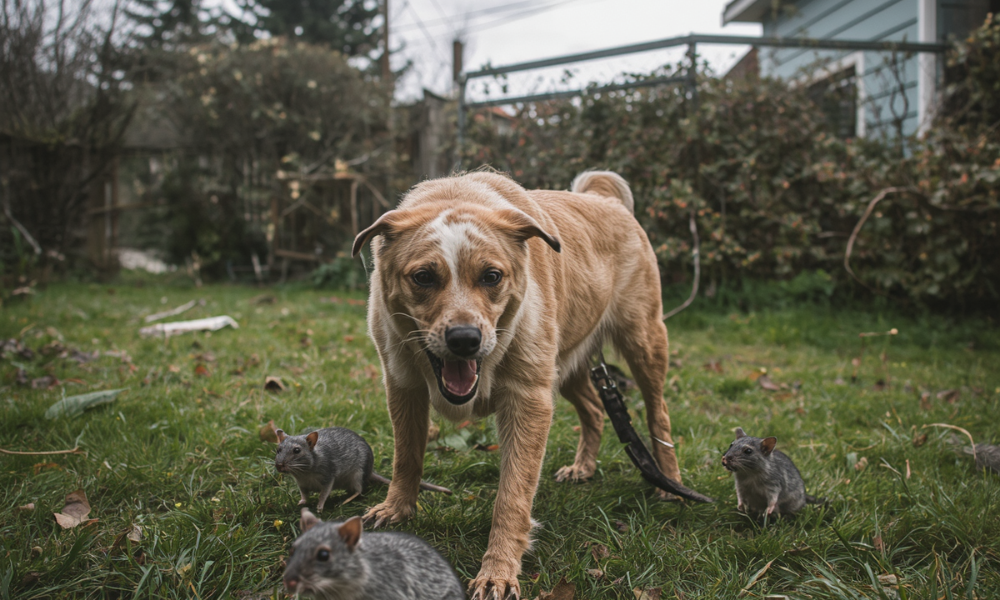
Most dog owners think of unremoved waste as an aesthetic problem or a health risk to the family. Fewer realize it is also a direct invitation to rats. Dog feces is cited as a primary food source for rodents in urban and suburban environments. Understanding why rats are drawn to dog waste, and what happens once they establish a presence in your yard, gives you a clearer picture of why consistent cleanup matters well beyond lawn appearance.
| Key Takeaways |
|---|
| • Dog feces contains undigested proteins, fats, and nutrients that rodents treat as a food source. |
| • Rats can detect the scent of dog waste from considerable distances using their highly developed sense of smell. |
| • Accumulated waste does not just attract rats, it can lead to nesting near your home. |
| • Once rodents establish a feeding site, they bring additional health risks including Hantavirus and Salmonella. |
| • Removing waste consistently is the single most effective step to eliminate this food source. |
What Makes Dog Waste Attractive to Rodents
Rats and mice are opportunistic feeders. They do not seek out specific foods. They seek reliable calorie sources wherever those sources are available. Dog feces qualifies on several levels.
Dogs eat commercial or homemade food that is nutrient-dense. Because a dog’s digestive system does not extract everything from that food, the resulting waste still contains undigested proteins, fats, and caloric material. To a rat operating in a suburban environment where food sources may be inconsistent, a yard that reliably produces dog waste several times per day is a dependable buffet.
The scent is also a significant factor. Rats have an extremely acute sense of smell, comparable to that of dogs in sensitivity. When waste is left in a yard for more than a day, the decomposing organic material releases odor compounds that travel. A rat foraging in adjacent properties can detect this scent from a meaningful distance and home in on your yard.
What Happens Once Rats Find a Food Source
This is where the problem escalates. A rat that finds food does not eat and leave. Rats are highly territorial and nest close to reliable food sources. A yard that consistently provides waste becomes a yard where rats establish themselves.
Once nesting begins, the population grows quickly. A female rat can produce up to 12 offspring per litter and several litters per year. What started as one or two rats investigating the scent can become a colony within a matter of weeks, particularly during warmer months.
Rats also carry their own set of pathogens. Hantavirus, Leptospirosis, and Salmonella are among the diseases associated with rodent contact or rodent droppings. When rats move through a yard contaminated by dog waste, they layer an additional health risk on top of the bacterial and parasitic risks already present in the feces.
Dog Waste Is Not the Only Attractant, But It Is a Consistent One
It is accurate to say that dog waste alone rarely causes a full rodent infestation. Rats are drawn to yards with multiple food and shelter opportunities. Uncovered trash bins, bird feeders, open compost, and woodpiles near the house all contribute to a favorable rodent environment.
However, dog waste is unique in one respect: it is produced multiple times per day, in consistent locations, by an animal that lives in the yard full-time. Unlike a spilled trash bag or a seasonal compost pile, it is a renewable food source that replenishes itself continuously unless actively removed.
This makes it the most persistent and preventable attractant available to address.
Other Pests That Dog Waste Attracts
Rodents are the most significant pest concern, but they are not the only one. Dog waste left in a yard also draws:
| Pest | Why It's Attracted | Additional Risk |
|---|---|---|
| Flies | Lay eggs in warm, moist waste | Spread bacteria to food and surfaces |
| Fleas | Feed on parasites present in waste | Bite humans and pets, transmit tapeworms |
| Cockroaches | Consume organic material in feces | Contaminate indoor spaces if they enter |
| Raccoons | Omnivores attracted to the scent | Carry rabies and additional parasites |
| Mosquitoes | Breed in moisture near decomposing waste | Transmit West Nile virus and other diseases |
The presence of one pest often attracts predators of that pest. A yard that draws rats, for example, can attract snakes looking for rodents. This escalation is entirely preventable with consistent waste removal.
Signs Rats Are Already Present in Your Yard
If you have been inconsistent with waste removal, it is worth checking your yard for these indicators:
- Small dark droppings near the waste area, along fences, or near the foundation of your home
- Gnaw marks on wooden structures, hose connections, or garden containers
- Burrow holes or tunneling near the base of fences, under sheds, or in garden beds
- Disturbed soil or mulch near the waste zones in your yard
- Unusual nighttime noise or movement heard along exterior walls
Rodents are nocturnal. You are unlikely to see them during the day even if they are present. The signs above are more reliable indicators than visual sightings.
How to Eliminate the Food Source and Reduce Rat Risk
The core intervention is straightforward: remove dog waste before it sits long enough to become an established scent signal for rodents.
- Remove waste within 24 hours of deposit. Same-day removal is best.
- Do not allow accumulation across multiple days during warm weather when decomposition and odor release accelerate.
- Dispose of waste in sealed trash containers. Open bins still emit odor and attract pests.
- Address other food sources simultaneously. Remove bird feeders, secure compost, and keep trash bins tightly covered.
- Reduce shelter opportunities. Keep woodpiles away from the house, trim ground-level brush, and seal gaps in sheds or fencing.
- Consider a professional pet waste removal service for daily or weekly scheduled cleanups.
CleanYard’s dog poop scooping service provides reliable removal on a schedule that eliminates accumulation entirely, reducing both the odor signals that attract rats and the health risks that come with unmanaged waste.
Related reading: How to keep dogs from pooping in your yard for additional tips on managing waste zones in your outdoor space.
Frequently Asked Questions
Is dog poop the number one food source for rats?
In developed suburban areas, dog feces is reported as a primary food source for rats. Its consistent availability and nutrient content make it a reliable target for opportunistic rodents.
How far away can rats smell dog waste?
Rats have highly developed olfactory systems comparable to dogs. While exact distances vary, rats can detect organic food sources across multiple property lengths, especially when decomposition intensifies the scent.
If I pick up waste the same day, will I still attract rats?
Same-day removal dramatically reduces attraction risk. Rats are less likely to establish a feeding routine if waste is not available consistently. Speed and regularity of removal are both important factors.
Does dog waste attract rats more than other pests?
Rats are among the most dangerous secondary pests because they nest permanently near food sources. Flies and fleas come and go with each deposit; rats establish a colony if waste is available reliably over weeks.
Should I call an exterminator if I see signs of rats in my yard?
Yes, if signs of nesting or burrowing are present. Remove the food source immediately and consult a pest control professional for active infestations alongside resuming consistent waste removal.
Remove the Buffet Before Rats Move In
Rats do not appear randomly. They follow food. Dog waste is a reliable, renewable food source that regenerates multiple times per day in a fixed location. As long as it remains in your yard, it functions as an ongoing invitation.
The fix does not require expensive pest control, at least not initially. It requires consistent waste removal before accumulation builds. Weekly or twice-weekly professional cleanup removes that food source reliably, reduces the attractant before rats establish a pattern, and keeps your yard free of the compounding pest risks that follow rodent activity.
See also: Dangers of using dog waste as fertilizer for more on why leaving waste in the yard compounds risk over time.